Showing posts with label Energy Efficiency. Show all posts

Thursday, February 14, 2008

Green Checklist for Homes


Here is a checklist you can use while looking for a house, or when looking for ways to improve your current home.

APPLIANCES AND COMPONENTS
  • Built-in recycling center
  • Clothes washer-horizontal access
  • Energy-efficient appliances
  • Energy-efficient clothes dryer
  • Energy-efficient dishwasher
  • Energy-efficient freezer
  • Energy-efficient heating, ventilation, and a/c
  • Energy-efficient refrigerator
  • Gas clothes dryer with electronic ignition
  • Gas cooktop with electronic ignition
  • Programmable thermostat(s)
  • Self-cleaning oven
APPLIANCES - WATER
  • On-demand hot water heater
  • Rainwater recovery system
  • Water-conserving appliances
  • Water-conserving clothes washer
  • Water-conserving dishwasher
  • Water-conserving shower
  • Water-conserving toilet
BUILDING MATERIALS
  • Advanced framing techniques
  • Bamboo flooring
  • Building material reuse/exchange
  • Cement board siding
  • Certified wood
  • Concrete flooring
  • Cork flooring
  • House/building wraps-radiant barriers
  • Insulating concrete forms
  • Natural Fiber insulation
  • Paper-based countertops
  • Pre-cut/assembled building systems
  • Recycled building materials
  • Recycled content drywall
  • Recycled and natural fiber carpets
  • Salvaged materials
  • Salvaged wood flooring
  • Strawbale construction
  • Sustainable forest products
CERTIFICATIONS
  • GreenPoint rated Home
  • GreenPoint (bay area)
  • Built to green building specifications-other
  • Earth Advantage-Northwest US
  • EarthCraft House-Southeast US
  • Energy Star Qualified Home
  • HERS Score 90-100 (scale 0 - 500; 0 best)
  • HERS Score under 90 (scale 0 - 500; 0 best)
  • LEED Certified-Commercial
  • LEED for Homes Certified
  • LEED for Neighborhoods Certified
  • NAHB Model Green Home - Bronze
  • NAHB Model Green Home - Silver
  • NAHB Model Green Home - Gold
CONSTRUCTION
  • Adobe
  • Earthship
  • Rammed Earth
  • Strawbale
ELECTRICITY & GAS
  • Alternative energy options
  • Natural gas
  • Propane
  • Rooftop solar
  • Solar Panels
  • Solar photovoltaic system
  • Wind turbine
ENVIRONMENTAL
  • Mold tested/inspected-acceptable limits
  • Phase I Environmental Site Assessment (ESA)
  • Phase II Environmental Site Assessment (ESA)
  • Private water (well, spring)-meets EPAs standards
  • Radon less than 4 pCi/L - long-term test (over 90 days)
  • Radon less than 4 pCi/L - short-term test (2-90 days)
  • Radon mitigation system
INSULATION - BASEMENT
  • Cellulose, post-consumer recycled content
  • Formaldehyde-free insulation
  • Natural fiber
  • R11-R19, warm climate, gas/oil or heat pump heat
  • R11-R19, warm climate, electric resistance heat
  • R11-R19, moderate climate, gas/oil or heat pump heat
  • R11-R19, moderate climate, electric resistance heat
  • R11-R19, cold climate, gas/oil heat
  • R13-R19, cold climate, heat pump or electric resistance heat
  • Structural insulated panels
INSULATION - CEILING AND ATTIC
  • Cellulose, post-consumer recycled content
  • Formaldehyde-free insulation
  • Natural fiber
  • R22-R38, warm climate, gas/oil or heat pump heat
  • R38-R49, warm climate, electric resistance heat
  • R38, moderate climate, gas/oil or heat pump heat
  • R49, moderate climate, electric resistance heat
  • R38-R49, cold climate, gas/oil heat
  • R49, cold climate, heat pump or electric resistance heat
  • Soy-based spray foam
  • Spray foam
INSULATION - WALL
  • Cellulose, post-consumer recycled content
  • Formaldehyde-free insulation
  • Natural fiber
  • R11-R13, warm climate, gas/oil or heat pump heat
  • R13-R25, warm climate, electric resistance heat
  • R11-R22, moderate climate, gas/oil or heat pump heat
  • R11-R26, moderate climate, electric resistance heat
  • R11-R22, cold climate, gas/oil heat
  • R11-R28, cold climate, heat pump or electric resistance heat
  • Soy-based spray foam
  • Spray foam
  • Structural insulated panels
LANDSCAPING
  • Bioswale for stormwater
  • Composite & plastic decking material-recycled content
  • Composite & plastic fencing material-recycled content
  • Drought tolerant/water conserving landscaping
  • Integrated pest management
  • Mulch-locally produced "greenwaste"
  • Natural water/drainage features
  • Public water supply
  • Rainwater
  • Restore and enhance natural vegetation
  • Rock, Stone & Gravel-local/recycled
  • Windbreaks
LIGHTING
  • Automatic control system for lighting
  • Natural daylighting
  • Skylights
  • Solar powered walkway or outdoor lighting area
  • Solar/Sun tube(s)
NATURAL ENVIRONMENT & MISC.
  • Cover for wildlife
  • Curbside recycling
  • Firebreaks
  • Native vegetation
  • Parks and public lands within a few miles
  • Public transportation within ½ mile
  • Radon tested, within acceptable limits
  • Recycling facilities nearby
  • Shade Trees
  • Water conserving landscaping
  • Water quality tested, acceptable results
  • Water rights
ORIENTATION AND SITE PLACEMENT
  • Earth bermed
  • Passive solar design
  • Southern exposure
ROOF
  • EDPM
  • Green roof-vegetation/garden
  • Living roof
  • Metal roofing-recycled content
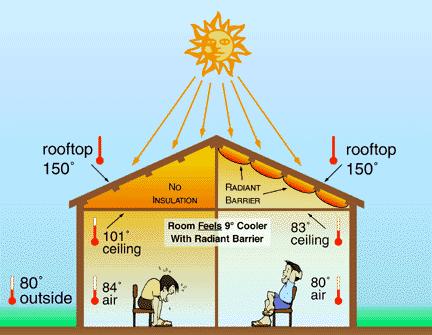
  • Radiant roof barriers
  • Reflective roof coating
  • Reflective roofing-Energy Star
  • Slate
  • Tile
SPACE COOLING
  • Cooling - Air-source heat pump
  • Cooling - Geothermal heat pump
  • Cooling - Evaporative cooling (swamp cooler)
  • Cooling - High SEER air conditioner (13 or higher)
  • Cooling - Passive cooling
  • Overhangs above south facing windows
SPACE HEATING
  • Heating - 90% or higher energy efficiency furnace
  • Heating - 90% or higher energy efficiency boiler
  • Heating - Active solar heating
  • Heating - Air-source heat pump
  • Heating - Baseboard hot water heat
  • Heating - Geothermal heat pump
  • Heating - Passive solar heating
  • Heating - Radiant floor heating
  • Heating - Solar water heating
  • HVAC zones
VENTILATION
  • Ceiling fan(s)
  • Smoke-Free
  • Ventilation system
  • Whole house fan
  • Whole house vacuum
WINDOWS
  • Energy Star Windows
  • Energy-efficient window coatings
  • Energy-efficient windows
  • Fiberglass Frames (highest insulation)
  • Low-e window coating
  • Spectrally selective glass
  • Vinyl Frames (moderate to high insulation)
  • Wood Frames (high insulation)
Copyright© 2003-2008 EcoBroker International

Saturday, July 14, 2007

Solar Panels


Now that I have my little business cards with my EcoBroker® designation proudly displayed, the most common question I have heard is “We have been thinking about putting up solar panels. Where would we start with that?”

That depends on what you want to accomplish with your solar panels. Do you want to
1. Generate Electricity,
2. Generate Heat, or
3. Generate Light?

Of course, you do not have to stick with just one of these goals. Read through the following options, explore the websites and the combinations of techniques and technologies that are best for you will become apparent.

If you want your electricity meter to run backwards (you cannot actually bring your bills to zero or lower), your most economical first step is to adjust your energy consumption first. That is a whole other blog entry. Until then, check out this children’s game from the UK that covers the basics in a much more fun way than reading a blog. My Abodo

1. Generate Electricity

If you are generating electricity, your solar panels are called photovoltaic (PV). Most of us in the South Bay are not concerned with living off of the city electrical grid and have no need for storing electricity in batteries. Generally what happens for an existing residential home is a retrofit of a BIPV (Building Integrated Photovoltaics) system. You may fit it onto your roof or locate it separately and connect it to your home electrical system by cable.

2. Generate Heat

If you are generating heat for your home (usually heating water in residential instances), your solar panels are plates usually painted with selective coatings that absorb and retain heat. Here in the SF Bay Area, this is an effective way to cut down on fuel bills from heating water. The solar collector is usually mounted on the roof and is connected to a circuit containing water. The headed liquid flows around a circuit to warm the main hot water tank or swimming pool.

3. Generate Light

If you are using sunlight to generate light in your home, consider implementing passive solar techniques. Passive solar is the absorption of solar energy in a building to save on heating and cooling costs. Windows are placed on a south-facing wall with an architectural feature that absorbs heat behind it. An overhang over the south-facing windows enables low angled winter sunlight to enter, while shading the home from the sun in the summer. Windows on the east and west sides of the building help to generate ventilation for summer cooling. I never have to use an air conditioner to keep my home cool using these methods during our summer heat waves.

If your home is not appropriately oriented for passive solar heating, light can be brought in to your home to lower electricity bills from lighting. For this, look into light shelves, skylights, and light tubes.

Have the Government Help You Pay For It

Now that you have a rough idea of what systems you want to look into using, make sure you pick systems and products that are approved by the government so that you can get your rebates. For up to date information in financial incentives for solar panel installation, make sure you check out the following websites:

PDF file from the Department of Energy about financing solar panels

Database of State Incentives for Renewables and Efficiency
SEIA PDF file with information on federal tax credits for solar systems
Go Solar California: the state government website on solar system incentives

Don’t Forget Your Sunglasses

This should be enough information to enable you to research your own needs for solar panels. If you are still confused, need help finding financing, or want help finding qualified solar panel installers, feel free to email me.

Saturday, June 30, 2007

Energy Ethics

I spent all yesterday at the Silicon Valley Association of Realtors. It's the local branch of the NAR. My day consisted of an orientation, swearing an oath, and an ethics class. Nothing dealing with green issues was discussed there, so why am I writing about it? Because we had a power outage.

All the presentations centered around PowerPoint, so they were about to send us home. The lights came back on just as they had us all raise our hands for the oath. This lead me to a brief contemplation of the energy generated from Realtor armpits. Nevertheless, the power was on again, so we had to go back to our ethics class with the caveat: "This always happens in the summer".

How quickly we get used to things instead of doing something to fix them. We just deal with rolling blackouts and shrug our shoulders. No big deal. Perhaps power outages will become so commonplace, people will learn to give a presentation without a slide show projecting exactly what they are saying. Why not just skip to doing things that do not require power to avoid causing the power drain?

Granted, a PowerPoint presentation is not putting strain on the grid, but air conditioners are. If we have to get used to rolling blackouts because they happen every summer, we will have to insulate our houses, and make sure we have good East/West ventilation to keep our houses from cooking us. Why not just keep our houses cool that way, and leave the air conditioners off?

Why does it take catastrophe to change? Good insulation is much cheaper than running an air conditioner. Why doesn't saving money spur change? If change is inevitable, why is it resisted?

In any case, change really is inevitable, and it doesn't matter what spurred it's arrival. I look forward to when proclaiming myself a "green" real estate agent is obsolete. Eventually all homes will have to be fixed up for energy efficiency and clean indoor air before they are sold. In the mean time, I am banking on the hope that there are other people like me eager to make the change before they have to.